Solid wood window sills


Solid oak window sills made to order in Riga
A solid oak window sill is a practical and elegant solution for finishing a window opening in the interior. Glued oak is well suited to window sills: it looks neat, is easy to work with and can be restored if needed. Each window sill is made to your individual measurements.
How to order a window sill
- Specify the required dimensions: width, length and thickness.
- Choose the finish — untreated or coated with hard-wax oil.
- Receive a price estimate and confirm the measurement details.
Manufacturing options
The window sill is made to individual measurements. You can choose an untreated version or order a window sill coated with hard-wax oil.
Dimensions and price
An oak window sill is made for a specific window opening. The final price is based on several parameters:
- Size — the width and length of the window sill for your opening.
- Thickness — 18 mm or 20 mm.
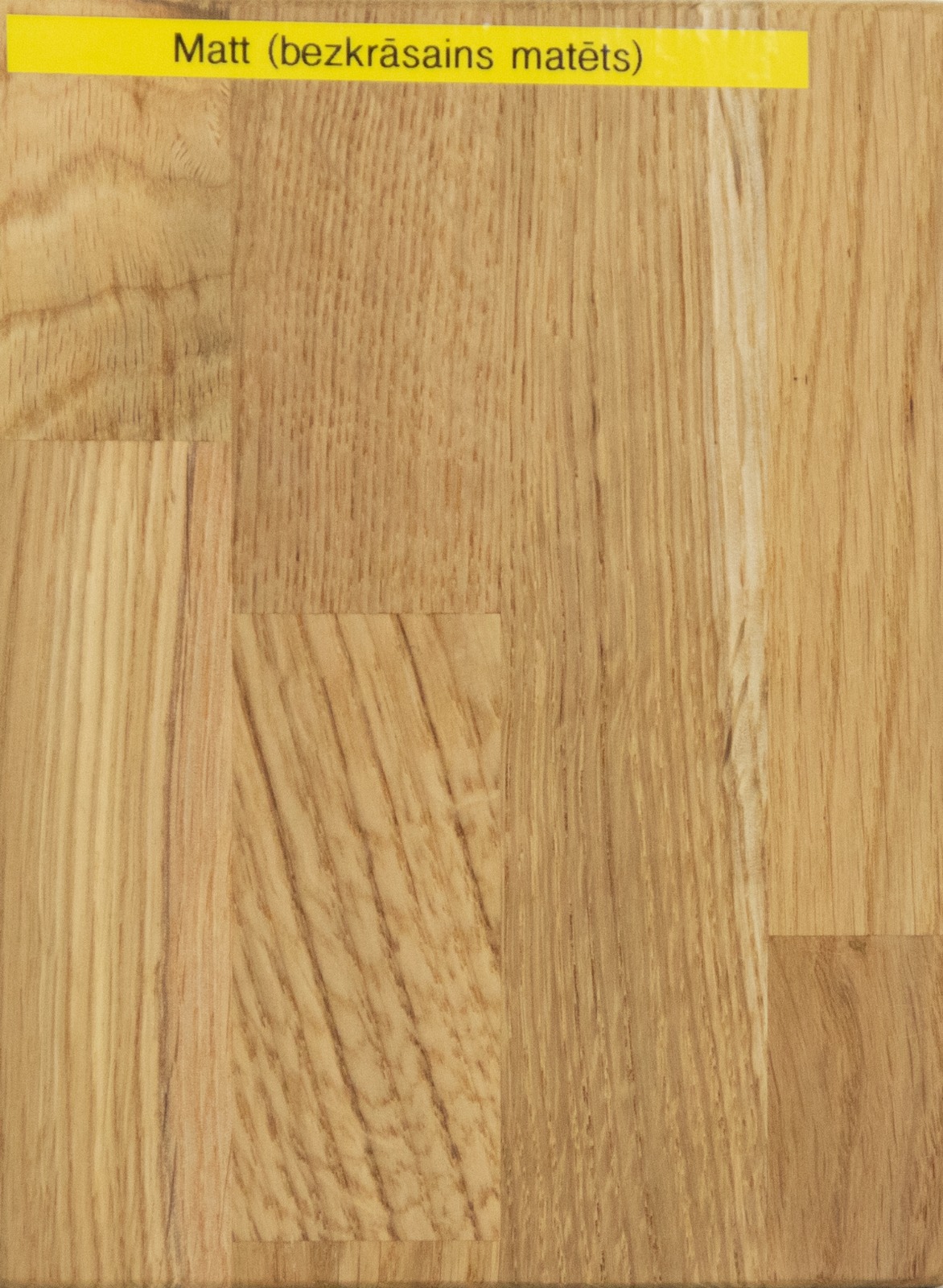
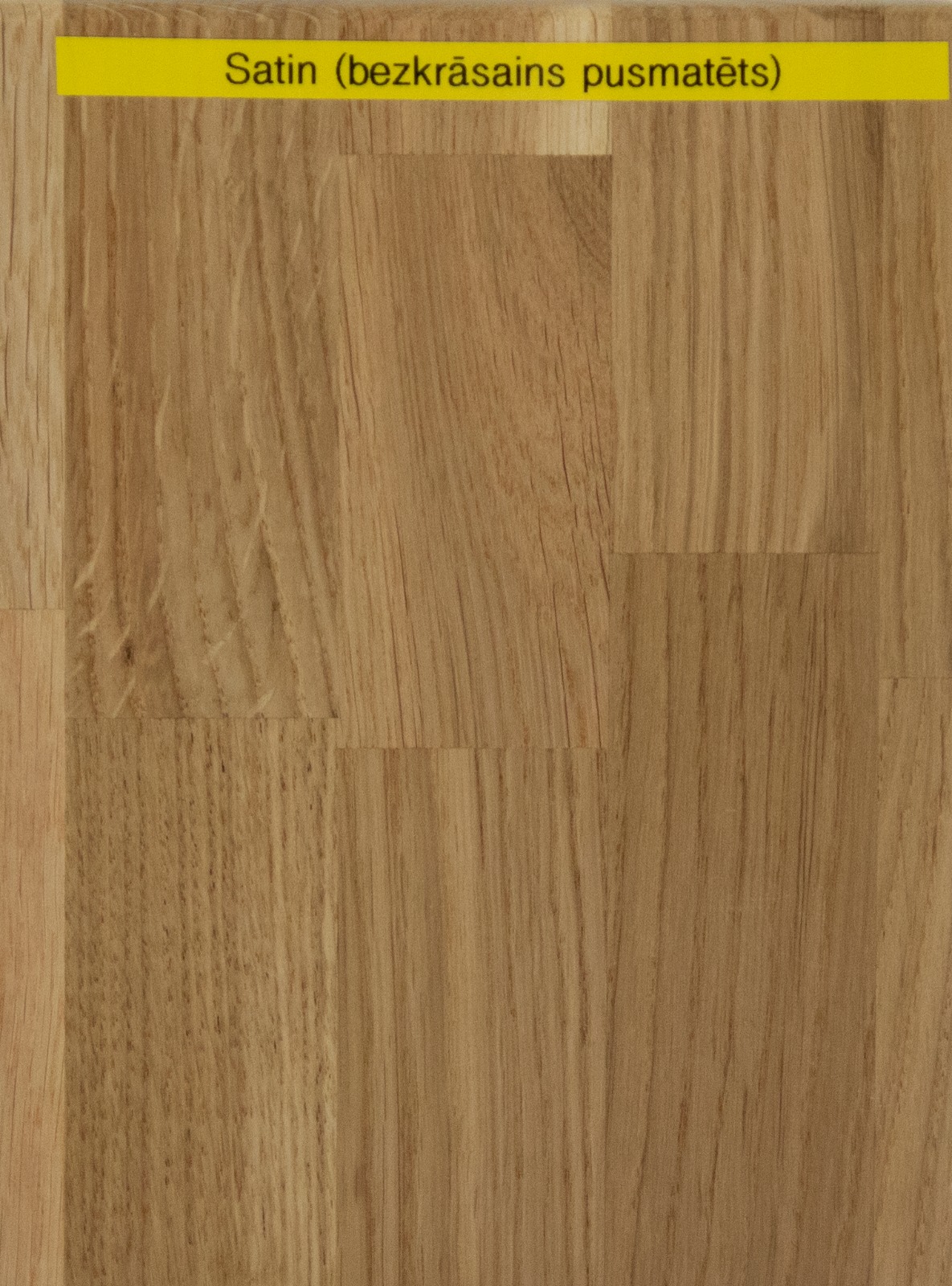
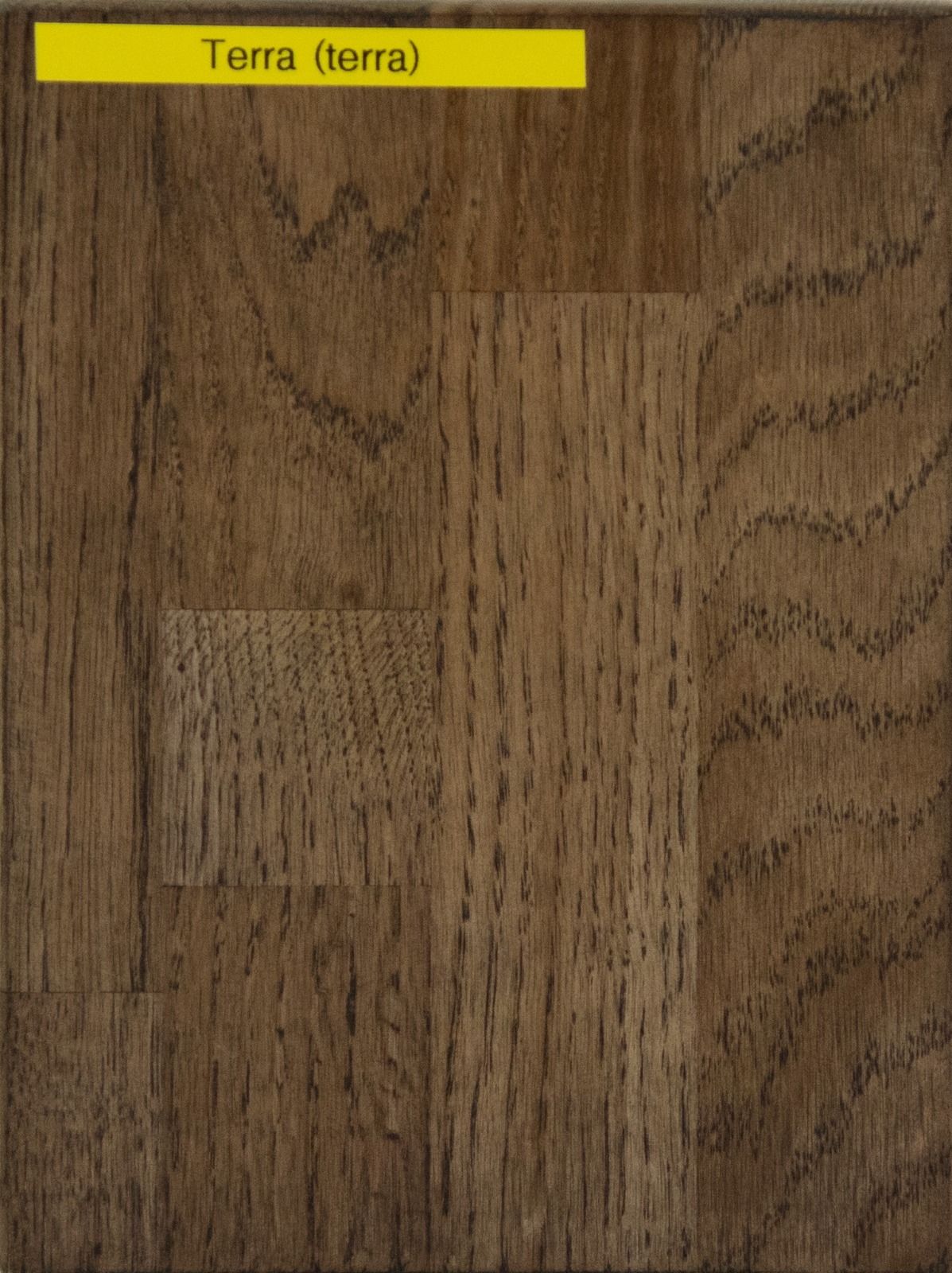
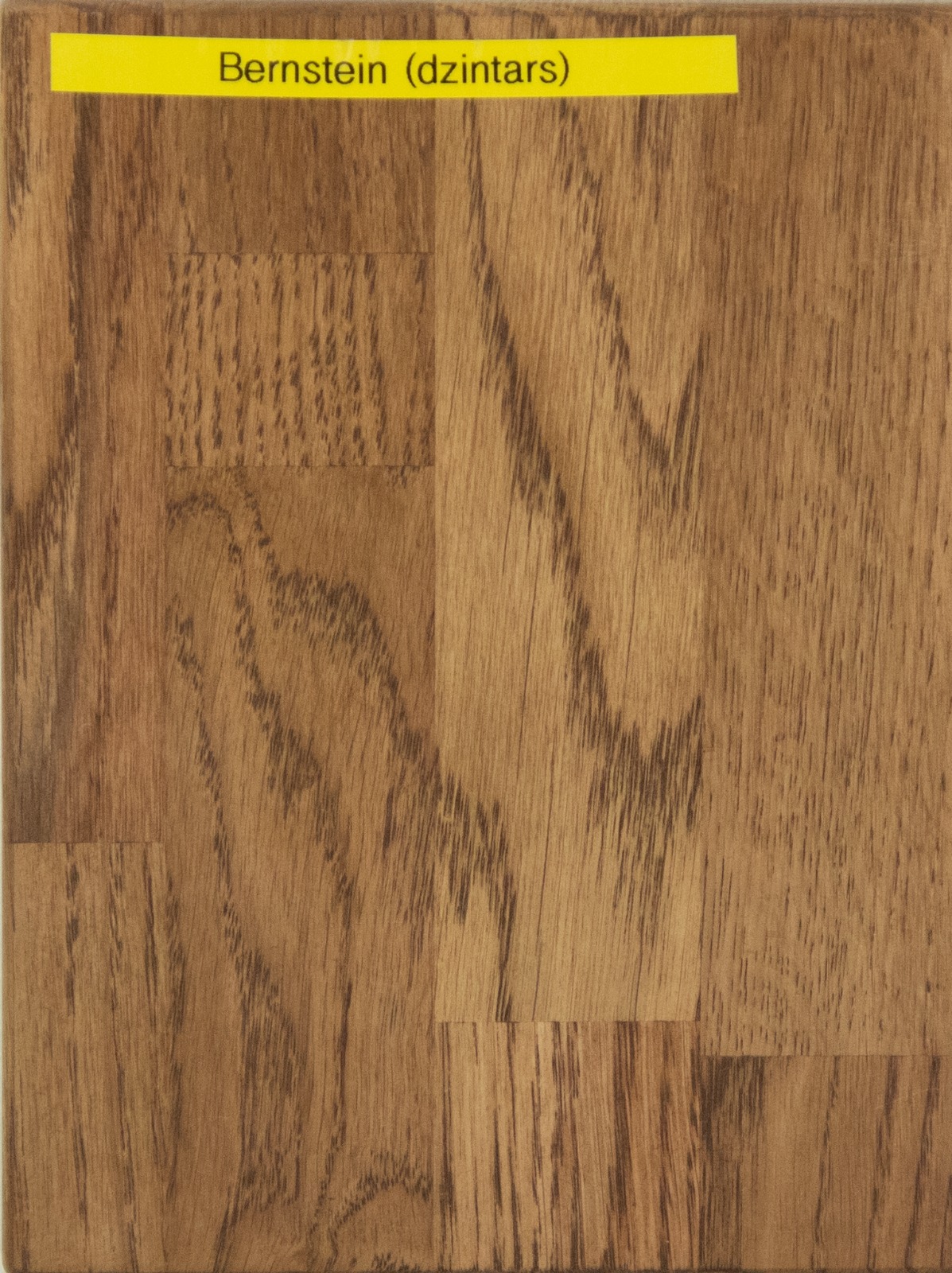
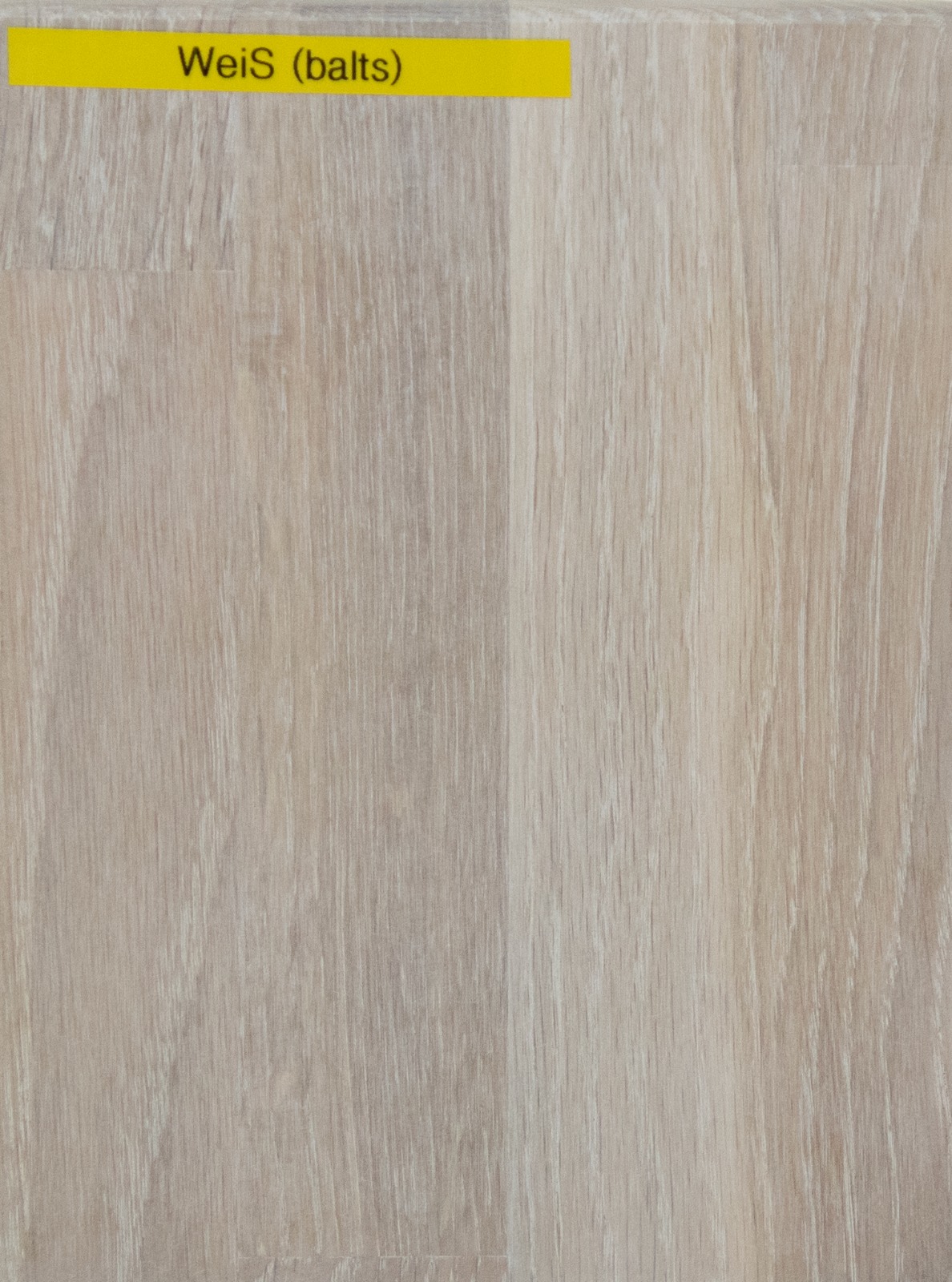
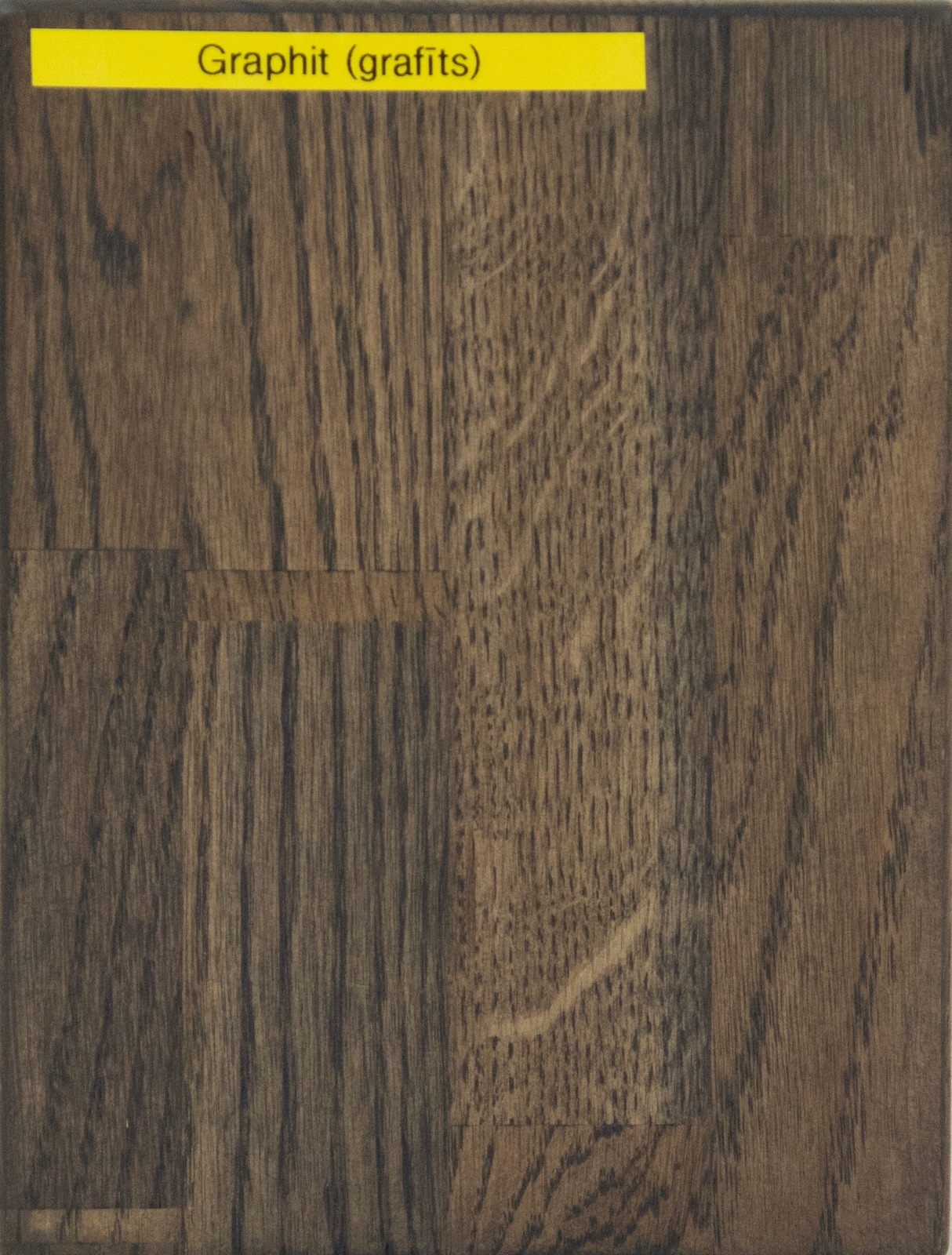
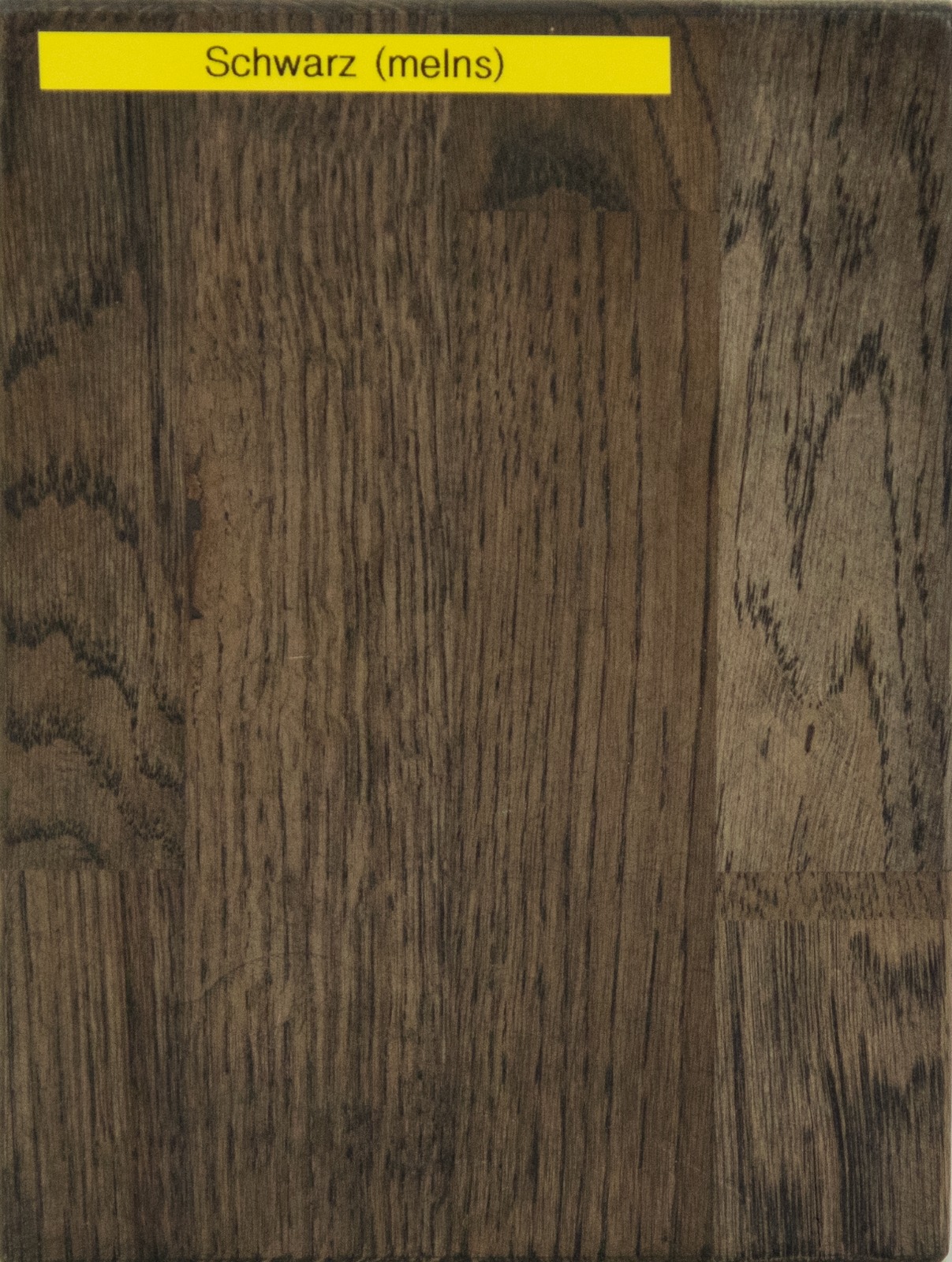
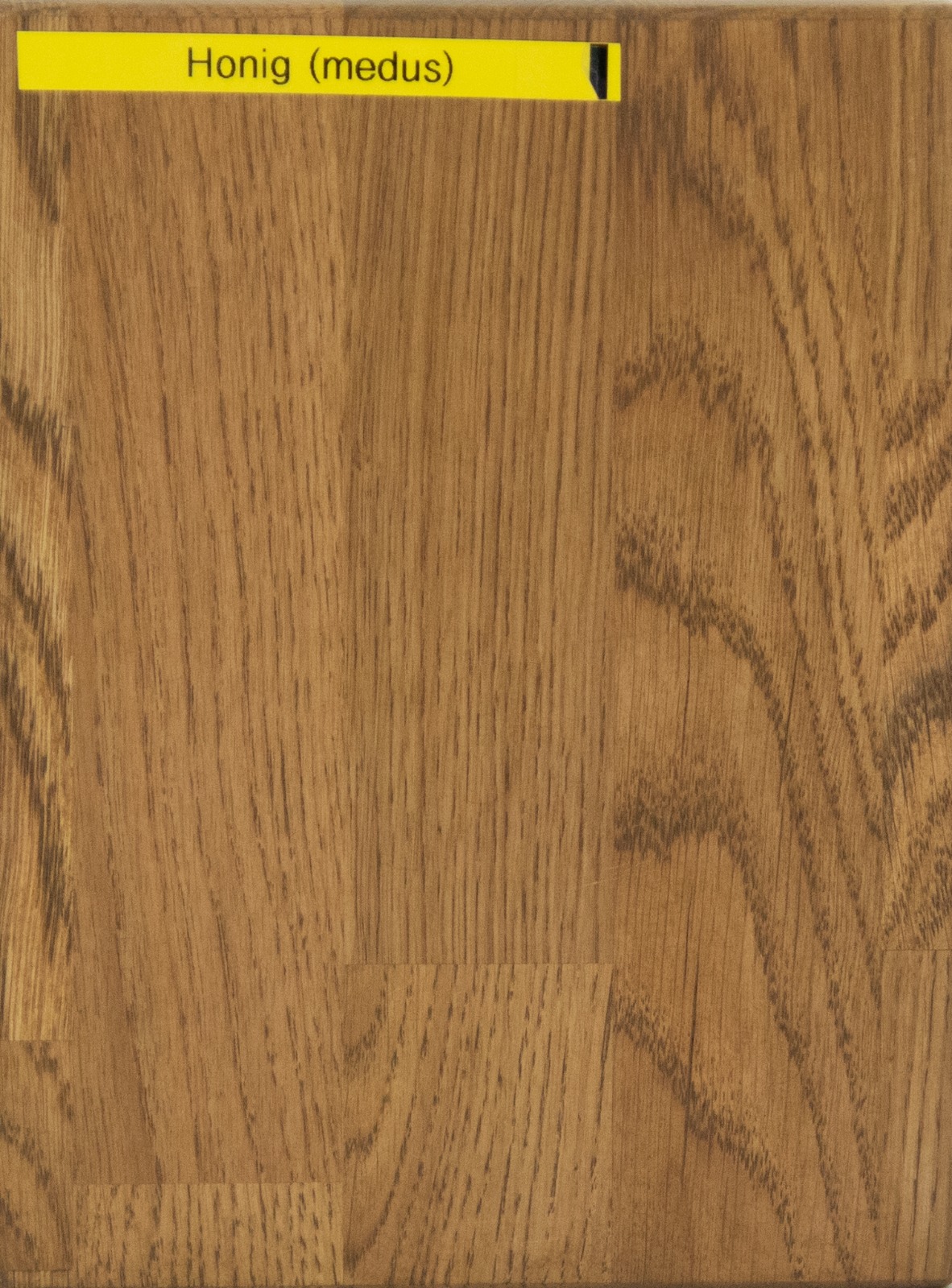
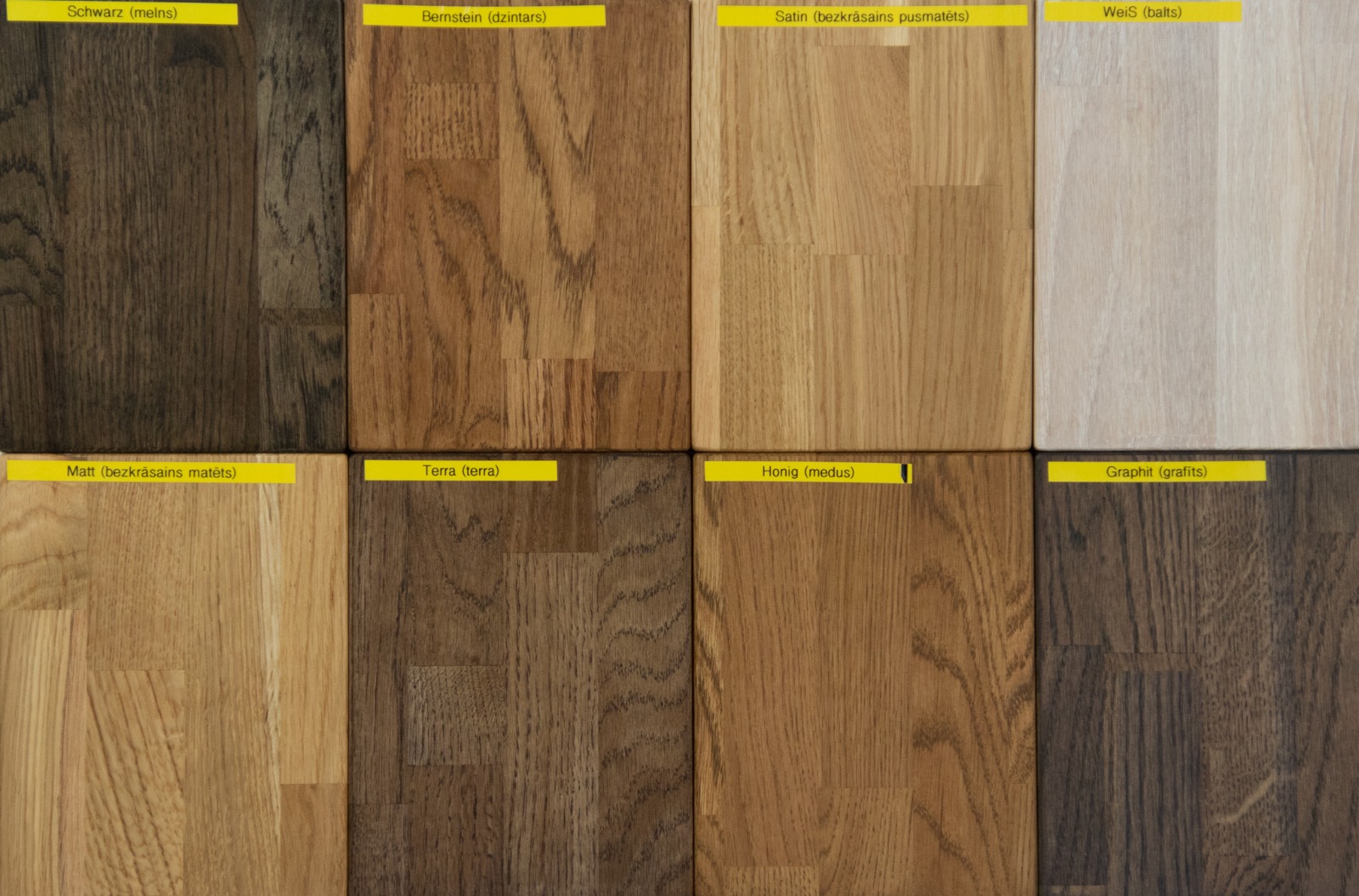
- Finish — untreated or tinted with hard-wax oil (MATT, SATIN, TERRA, BERNSTEIN, WEISS, GRAPHIT, SCHWARZ, HONIG).
For an accurate quote, provide the width, length, thickness and preferred finish — the price is calculated individually for your order.
Colour and finish options
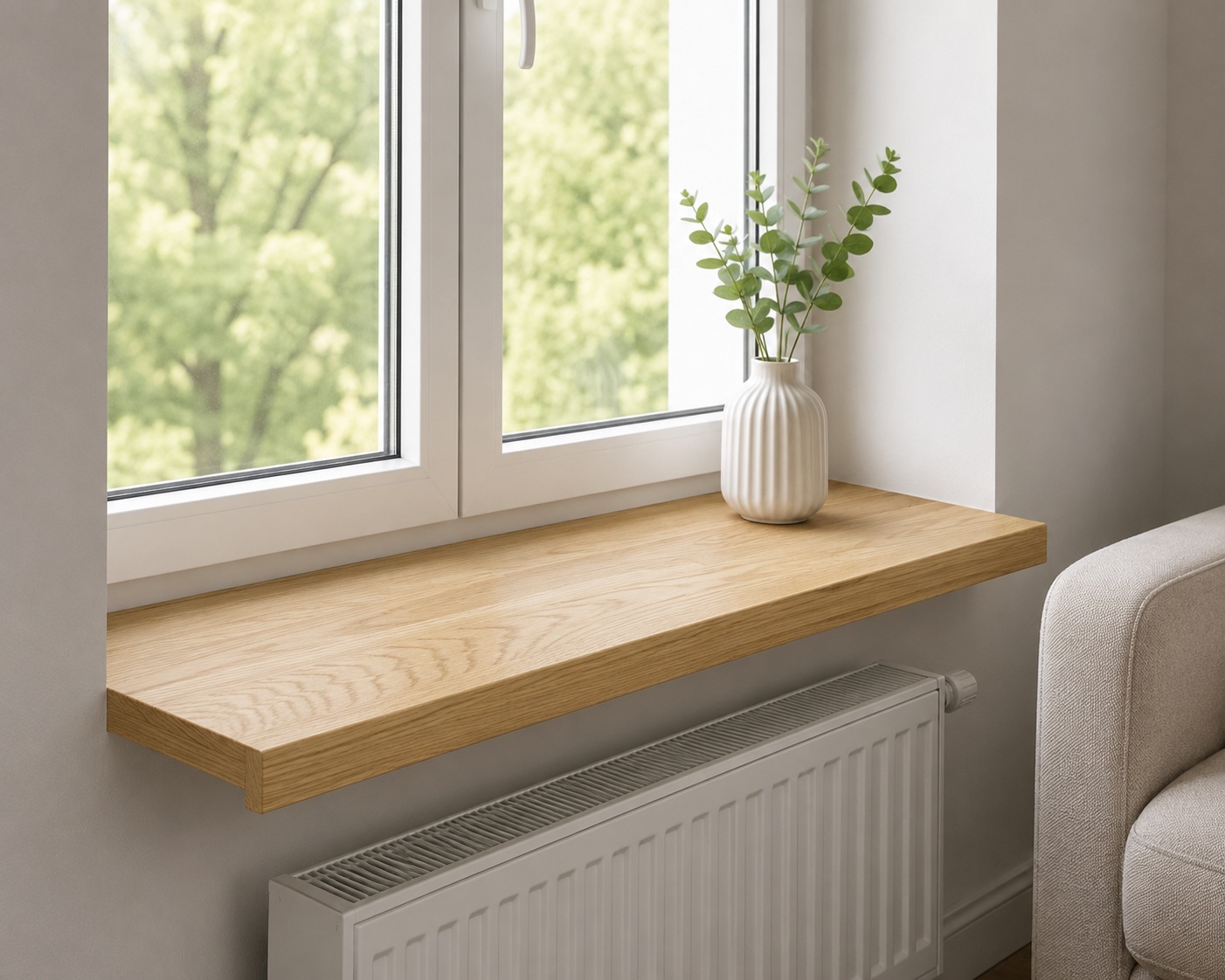
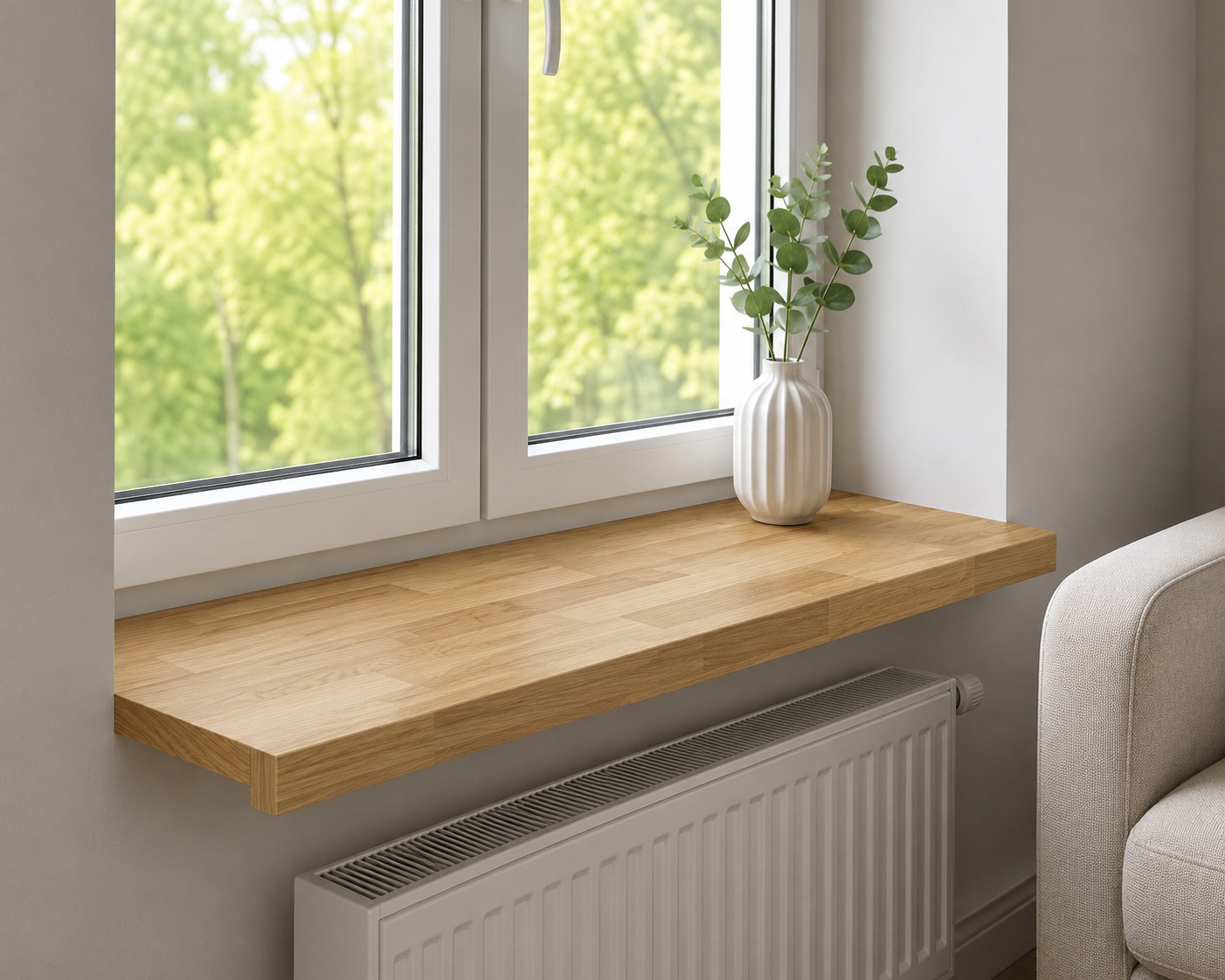
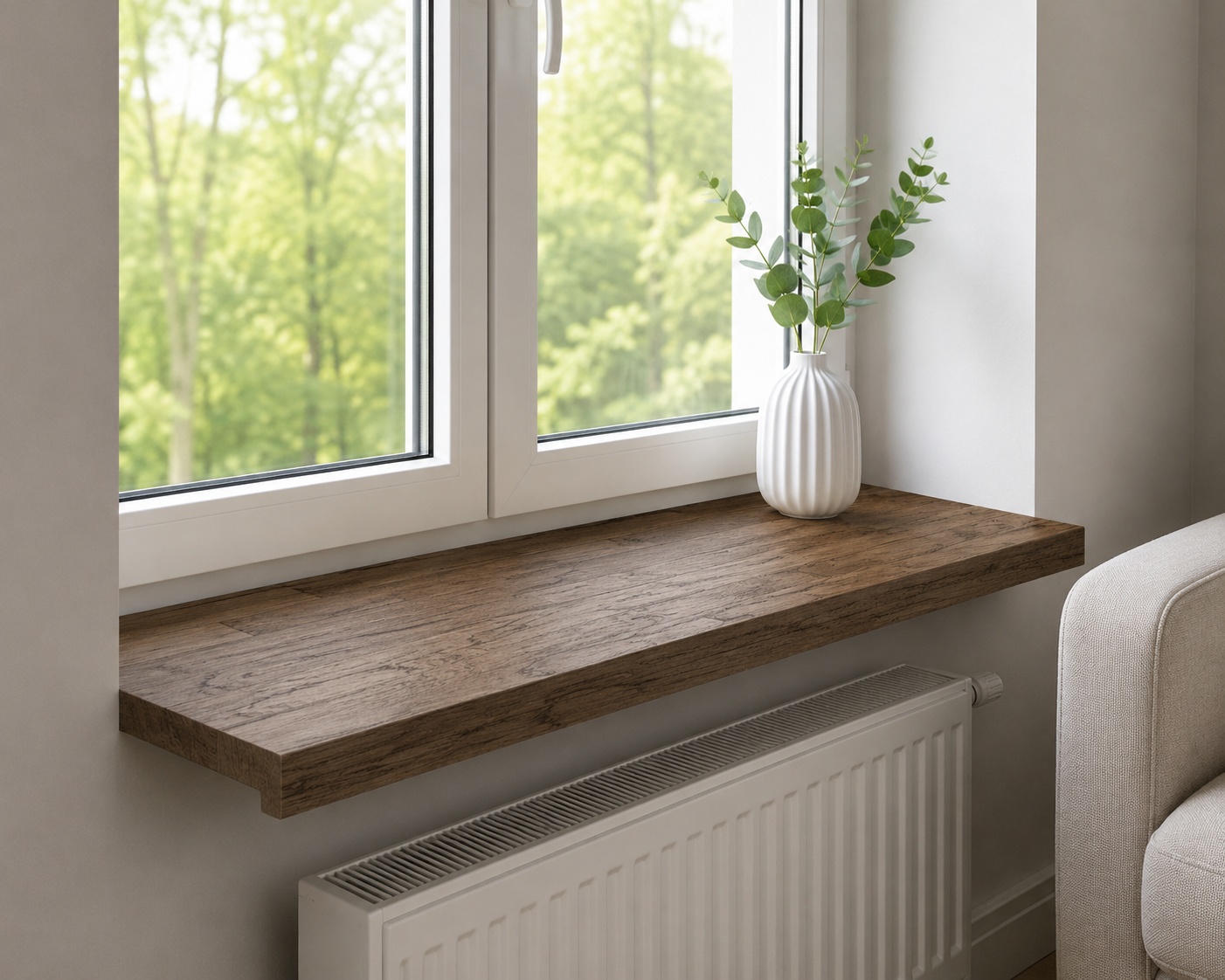
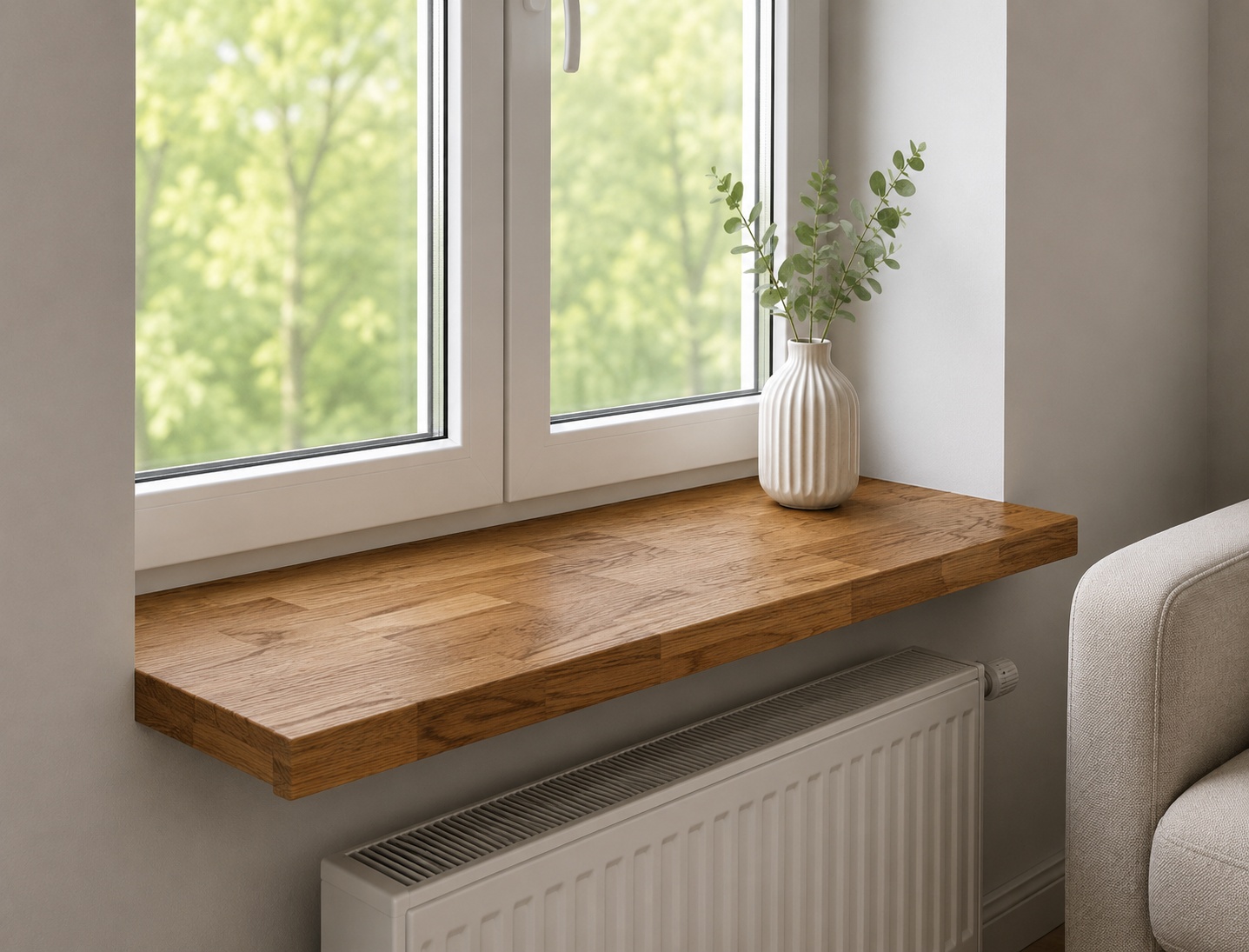
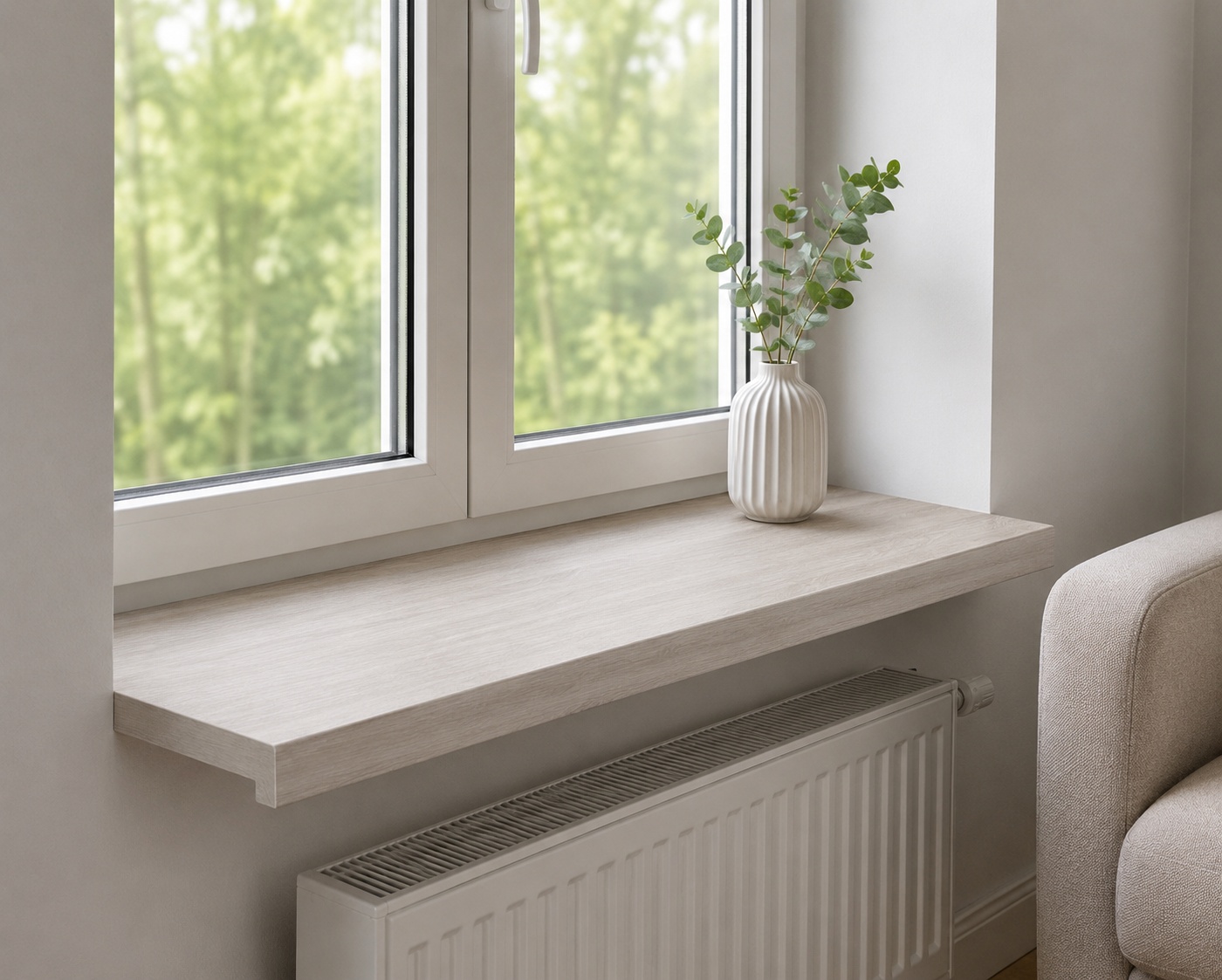
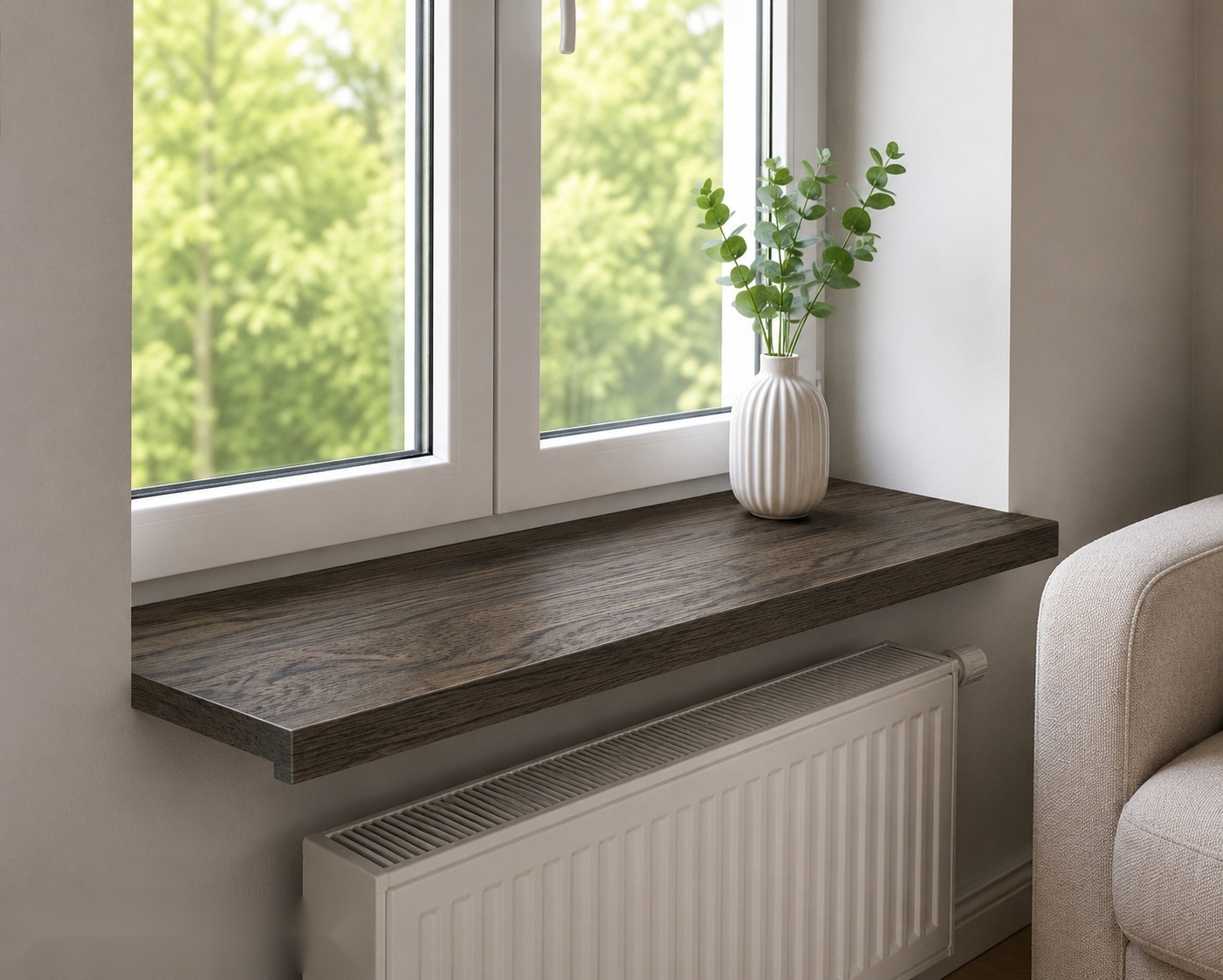
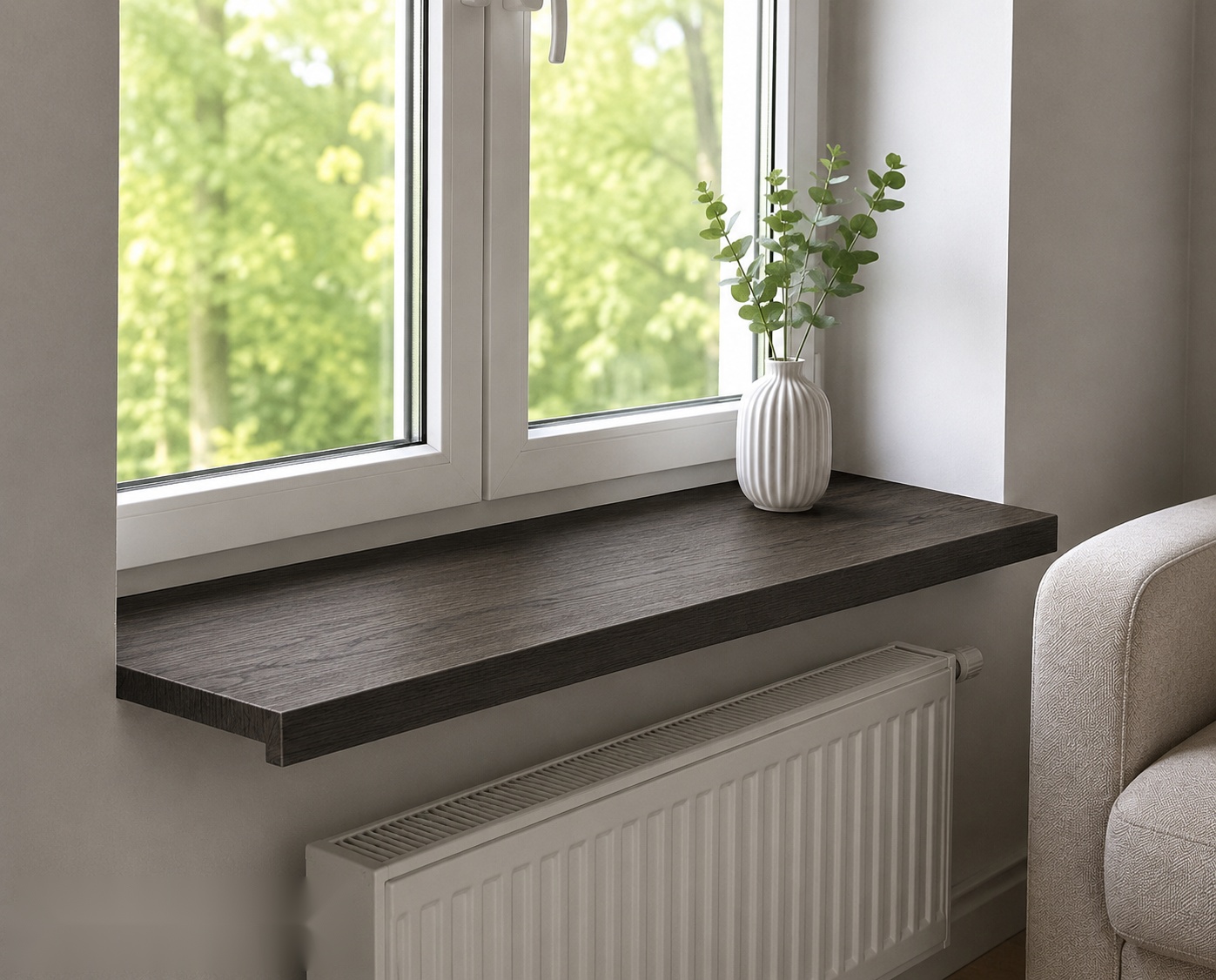
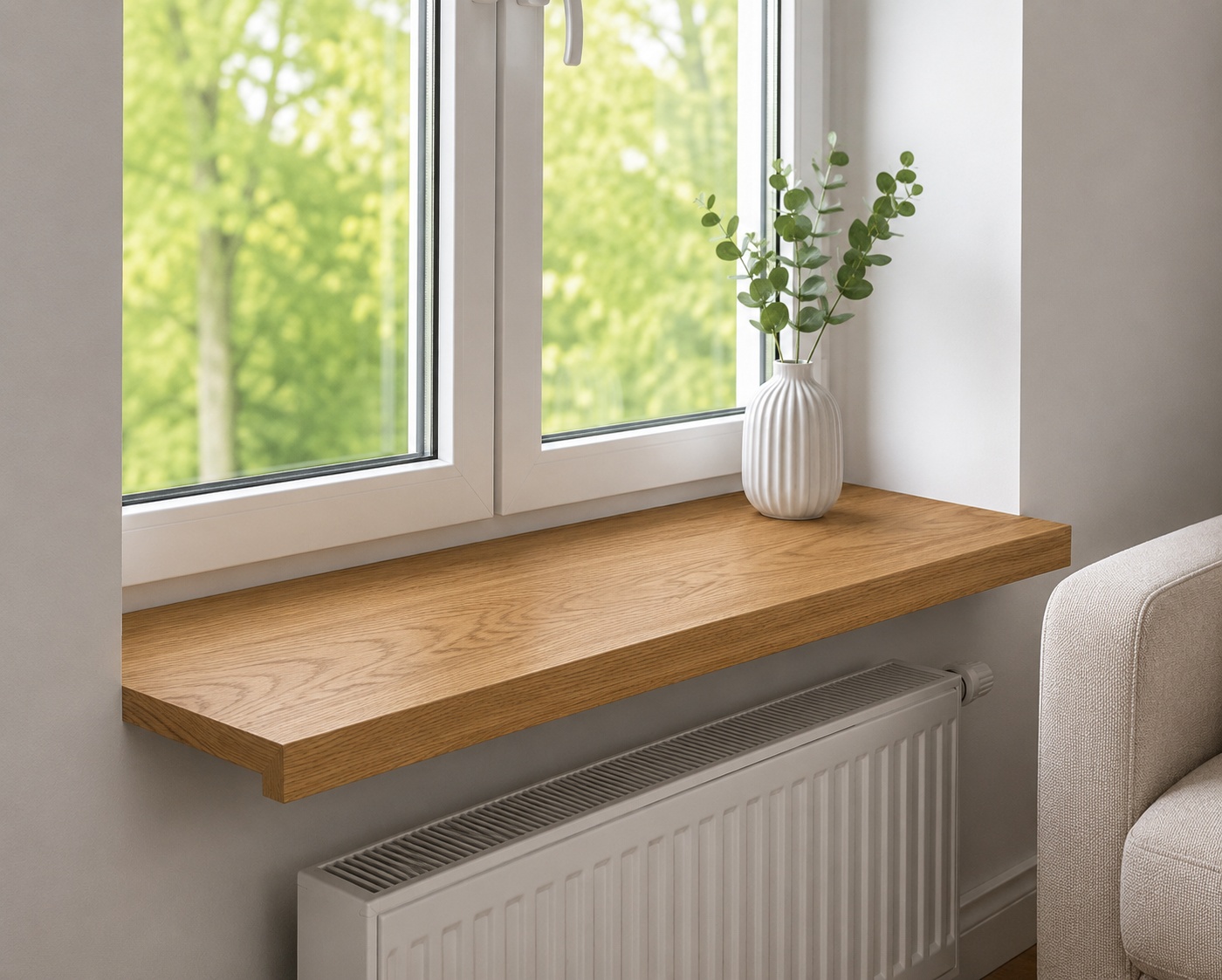
Below are real oak samples with different hard-wax oil finishes: from colourless matte to rich tinted shades. Click a sample to view the texture in more detail.
Structure and shape of the window sill
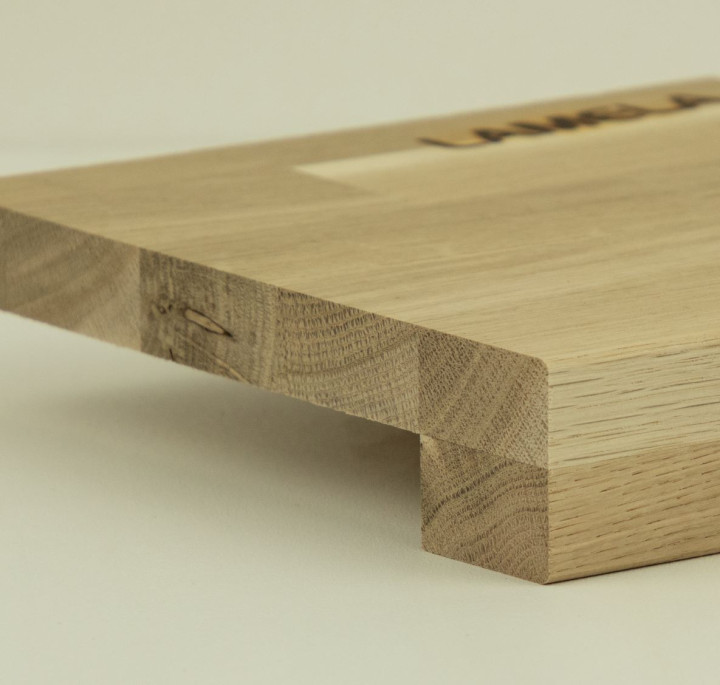
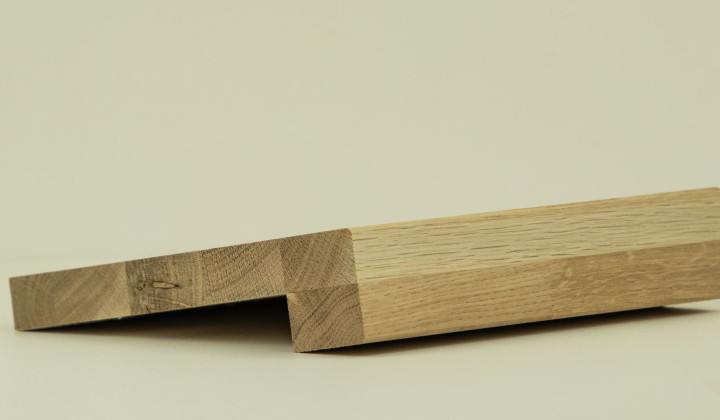
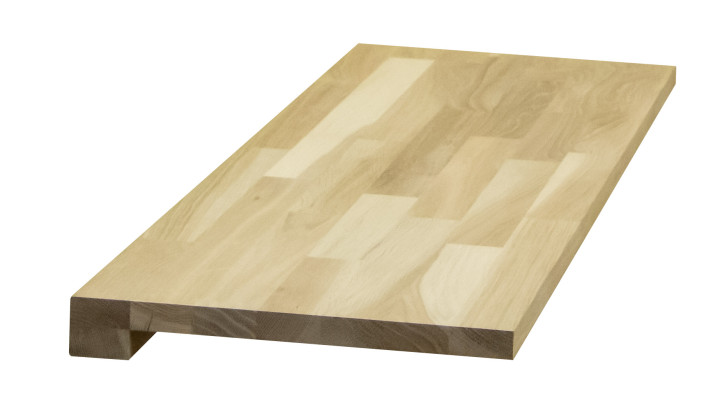
The window sill is made from a glued (finger-jointed) oak lamella. Below are the wood structure, the end profile and the finished product. Click a photo to enlarge.
Why choose an oak window sill
- Natural appearance and expressive oak texture.
- Suits both classic and modern interiors.
- Made to the required width and length for your opening.
- Available with a natural or tinted finish.
- The surface can be restored when worn — the window sill lasts a long time.
See also
Frequently asked questions
What does finger-jointed oak mean?
It is glued wood assembled along its length from short pieces using a finger joint. This version is strong, stable and less prone to deformation than a single solid board.
Can I order a window sill without a finish?
Yes, the window sill can be ordered without a final coating if you plan to apply the finish separately.
Which finish options are available?
Hard-wax oil options are available: MATT, SATIN, TERRA, BERNSTEIN, WEISS, GRAPHIT, SCHWARZ and HONIG — from colourless matte to tinted shades.
How long does production take?
For a window sill with a hard-wax oil finish, production can take up to 4 weeks.
How do I choose the window sill size?
Usually the width of the window opening, the desired overhang of the window sill and the length with an allowance into the reveals are taken into account. The exact size is best confirmed after measurement.
Detailed overview: solid oak window sills
A solid oak window sill is an element that sets the tone for the entire window opening. When windows are replaced in a flat or house, most attention goes to the profile, the glazing unit and the hardware, while the window sill seems like a secondary detail. In practice it is exactly what completes the window composition: flowers, books and devices sit on it, and it becomes an additional work surface or a place people like to sit. Unlike plastic and laminated options, solid wood is perceived as a more premium and “warmer” material — it has a living texture, a natural grain pattern and a pleasant surface. That is why oak window sills are often chosen where not only function matters, but also the character of the interior: in classic living rooms, studies, country houses, as well as modern spaces where natural wood works as an accent.
Oak is one of the strongest and most wear-resistant species for interior finishing. Its dense structure holds up well under load, resists dents and lasts for decades. Logi24 window sills are made from glued (finger-jointed) wood: short pieces are joined along the length with a finger joint and glued into a single lamella. This technology provides two important things — geometric stability (a finger-jointed window sill warps and twists less with changes in humidity and temperature) and rational use of timber, which makes the product more affordable than solid one-piece timber with a virtually indistinguishable appearance.
How an oak window sill differs from PVC, chipboard and stone
On the interior window sill market four materials are most often compared: solid wood, laminated chipboard, PVC and stone. Each has its own logic of use. PVC window sills are the cheapest, they are not afraid of moisture and suit kitchens and wet areas, but visually it is plastic, and a “wood look” appears only nominal. Laminated chipboard is a middle ground in price: a neat surface, many decors, yet it is still a board with a film coating that cannot be repaired if chipped. Stone window sills (natural stone, agglomerate) are solid and durable, but noticeably more expensive, heavier and more complex to install.
Oak stands at the top among the “warm” materials: it is genuine solid wood with a natural texture that can be sanded and restored. It is more expensive than PVC and chipboard, but it offers what they cannot — the depth of natural wood and repairability for years to come. An important limitation: oak is intended for dry interior spaces. It is not suitable for permanently damp areas or outdoor installation — there PVC or external metal window sills are more logical.
Finish: untreated or hard-wax oil
The window sill can be ordered in two basic versions. The first is untreated: suitable if you plan to coat the surface yourself or match the shade to an existing interior finish. The second is coated with hard-wax oil. The oil penetrates the wood structure, protects the surface from moisture and dirt and at the same time preserves the natural oak texture: unlike lacquer, it does not form a film, does not glare and is more pleasant to the touch. Another advantage of oil is local repairability: a worn spot can be refreshed in place, without fully re-sanding the entire surface.
The tinting palette covers the full range of interior tasks. The colourless MATT (matte) and SATIN (satin) options preserve the natural tone of oak and suit light, Scandinavian and neutral interiors. The coloured shades offer more expression: TERRA — warm brown, BERNSTEIN — amber, WEISS — whitewashed, HONIG — honey, while GRAPHIT and SCHWARZ are dark graphite and black for contrasting, modern solutions. The same oak looks different under different oils, so it is better to choose the shade not from an on-screen image but from a physical sample.
How to choose a shade for your interior
When choosing a finish it makes sense to work not from the window but from the floor, doors and furniture. If the room has a warm wooden floor or solid-wood furniture, the natural and honey tones (MATT, SATIN, HONIG, TERRA) will tie the interior together. For light, minimalist spaces WEISS works well — whitewashed oak does not compete with white walls and windows. The dark tones GRAPHIT and SCHWARZ are appropriate where an accent and contrast are needed: against white reveals or a light floor, a dark window sill looks graphic and expensive. There is no universal “correct” colour — there is a combination that supports the rest of the finish, so the final decision is best made with a sample in hand, under the same lighting as in the room.
Dimensions, thickness and AB quality grade
Oak window sills are available in 18 and 20 mm thickness and are made to individual measurements for a specific window opening. The thickness is chosen according to the mounting depth and the desired visual “weight” of the window sill: 18 mm looks lighter, 20 mm more solid. AB quality grade means a face surface with a moderate amount of natural wood features: small sound knots, slight tonal variation and a natural grain pattern are allowed — this is exactly what gives oak its lively, natural character (unlike “sterile” plastic). When ordering, three key dimensions are taken into account: width (depth from the window to the front edge), length (with an allowance into the side reveals) and thickness.
Finger-joint structure and product shape
Finger jointing is not a cost cut at the expense of quality, but an engineering solution. A single long board more often cracks and warps over time due to internal stresses in the wood. A lamella glued from short segments with differently oriented grain distributes these stresses and holds its geometry more stably — this is especially important for long window sills on wide windows and bay windows. The ends and edges are neatly finished, and the product is supplied ready for installation to the size of your opening.
Care and durability
The main advantage of a wooden window sill over plastic and laminated ones is repairability. Minor scratches and signs of use on oak are removed with light sanding and a fresh application of oil, whereas a damaged PVC or chipboard window sill usually has to be replaced entirely. Care is simple: wiping with a soft cloth without aggressive chemicals or abrasives, and once every one or two years — refreshing the oil coating in areas of active contact. With this treatment an oak window sill keeps its appearance for decades and over time acquires a noble patina that only adds character to the wood.
Where an oak window sill fits best
Solid oak is particularly good in dry living spaces where the window sill is visible and part of the interior: living rooms, bedrooms, studies, children's rooms, bay window areas, as well as country houses and cottages with wooden finishing. It goes perfectly with wooden windows, but looks no less advantageous next to a white PVC profile, adding “warmth” to it. In commercial interiors — showrooms, offices, boutique spaces — an oak window sill works as a detail that raises the perceived quality of the finish as a whole.
When an oak window sill is the optimal choice
A solid oak window sill is worth considering when the naturalness of the material, a premium appearance and a long service life matter, and the budget allows a solution above basic plastic. For dry living spaces it is one of the most rewarding investments: it does not become dated, it is repaired rather than thrown away, and it looks only better with the years. Oak is not intended for wet areas or outdoor installation — there PVC or external metal window sills are more suitable. The exact dimensions, thickness and finish are best agreed after measurement, so that the window sill fits the opening perfectly and serves for many years.